The Union City regulatory landscape
Extremely high residential density leaves few parcels clear of school and park buffers.
Bergenline Avenue's continuous storefront corridor is the primary commercial spine.
Limited off-street parking and loading capacity constrain retail and delivery buildouts.
Union City cannabis market conditions and local regulatory posture
Union City's cannabis market is defined almost entirely by its density. It is one of the most densely populated municipalities in the United States, packed into just over a square mile, and that fact drives every siting decision more than any policy choice the township makes. Retail demand is not in question — the resident population alone supports strong foot traffic along Bergenline Avenue — but the supply of parcels that can satisfy school, park, and cannabis-establishment buffer requirements while also sitting in a commercially zoned district is genuinely limited, and it does not grow over time the way it might in a less built-out town.
Bergenline Avenue functions as the commercial spine for Union City and several neighboring Hudson County municipalities, running as a nearly continuous storefront corridor. That continuity is an advantage for visibility and walk-in traffic, but it also means competing retail uses, existing tenants, and adjacent residential entrances are packed tightly together, so a single block can present several buffer conflicts that would be spread across a much wider area in a lower-density town.
Because compliant sites are scarce, landlord leverage in Union City tends to be unusually strong, and rents for buffer-compliant storefronts often reflect that scarcity rather than the underlying commercial fundamentals. Applicants who identify a workable address early, before a competing operator does, generally have more negotiating room than those who begin the search only after receiving a conditional license.
How the New Jersey licensing framework applies in Union City
Every Union City matter runs on two tracks at once. The state track is governed by CREAMMA, N.J.S.A. 24:6I-31 et seq., and the Cannabis Regulatory Commission's rules at N.J.A.C. 17:30, which control who may hold an interest in a license, what must be disclosed, and how a facility must operate. The local track is governed by Union City's ordinance and the Municipal Land Use Law, N.J.S.A. 40:55D-1 et seq., which control whether the licensed use may exist at a particular address at all. A state license without local approval cannot open, and local approval without a defensible state application is a lease liability.
The sequencing consequence is a deadline. A conditional licensee has 120 days under N.J.A.C. 17:30-7.6 to secure site control and municipal approval and submit its conversion application, with a limited extension available on a showing of diligence. Because Union City Planning Board and Zoning Board of Adjustment meet on a fixed monthly calendar and require complete submissions in advance, that calendar has to be mapped against the state deadline before a conditional application is filed — not after an award arrives. See our conditional-to-annual conversion practice for the full workflow.
Commission fees are modest relative to that timeline: under N.J.A.C. 17:30-7.17, a standard conditional application carries a $200 submission fee and an $800 approval fee, and an annual license application carries $400 and $1,600, each halved for microbusinesses. In Union City, the controlling costs are rent during review, build-out, security systems, and professional fees.
Which license classes Union City realistically supports
- Retail (Class 5)
- Strong resident demand along Bergenline Avenue, sharply constrained by buffer scarcity in one of the state's densest built environments.
- Delivery (Class 6)
- A practical alternative where compliant storefronts cannot be secured, well matched to the township's dense, walkable residential population.
- Microbusiness
- The smaller footprint and reduced buffer exposure of a microbusiness model can make otherwise unusable parcels viable.
How we represent Union City operators
- Parcel-by-parcel buffer measurement and survey documentation
- Zoning Board of Adjustment variance practice for constrained lots
- Storefront lease negotiation along Bergenline Avenue and side streets
- Delivery and microbusiness structuring where retail frontage is unavailable
Local boards and hearings
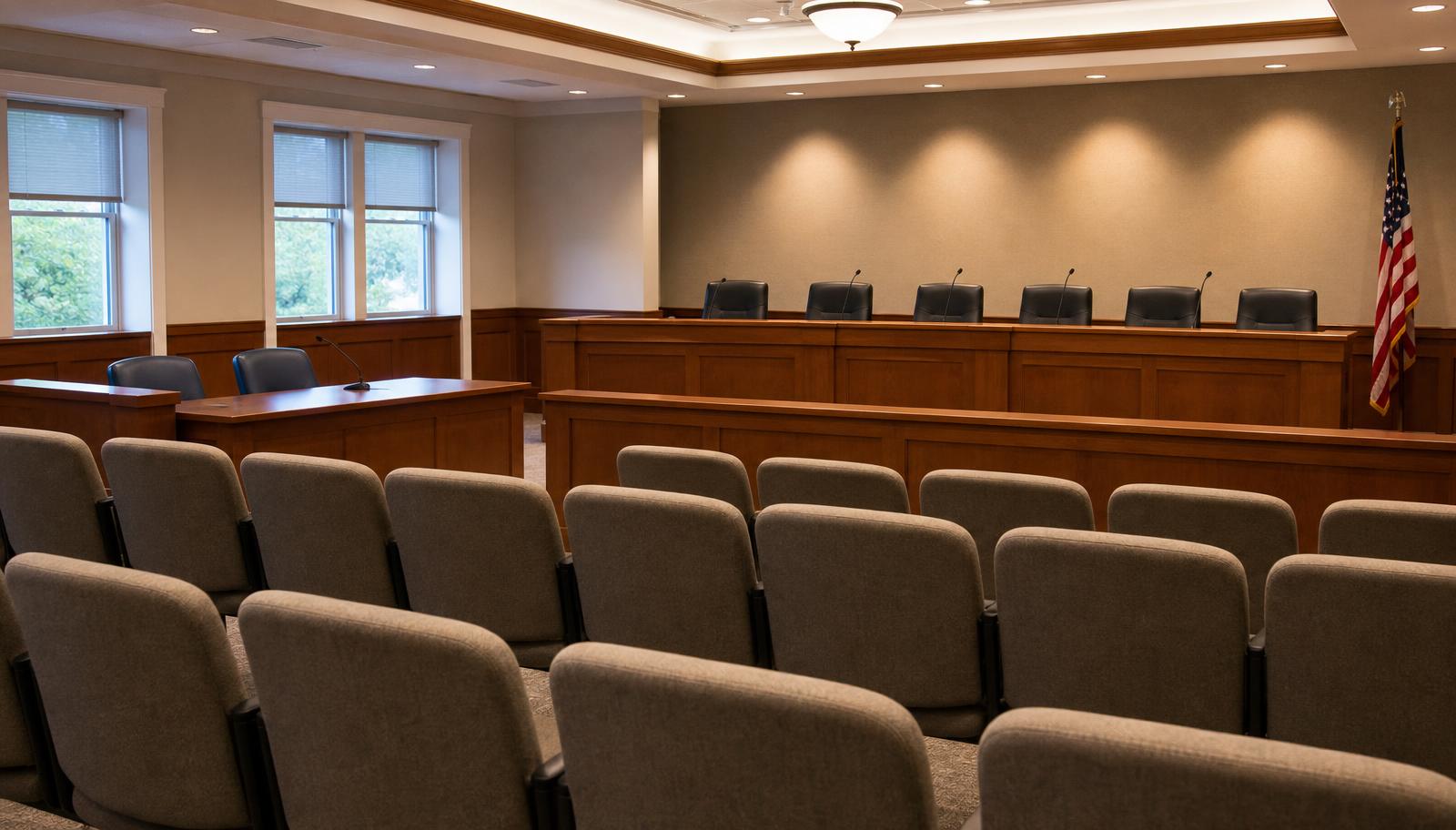
Applications in Union City are heard by the Union City Planning Board and Zoning Board of Adjustment. We prepare the application record, coordinate planning and traffic experts, and present testimony designed to survive both the vote and any subsequent review. See our municipal zoning and planning board practice and our New Jersey CRC licensing practice for the underlying workflow.
Union City may also impose a local transfer tax of up to two percent of receipts under N.J.S.A. 24:6I-21 and may seek a host community agreement with hiring, reporting, or community benefit terms. Those instruments outlive the approval that produced them, so we negotiate them as long-term corporate obligations. Our guide to host community agreements covers the recurring negotiation points.
Site selection and land use mechanics in Union City
Union City siting work is almost entirely a buffer exercise. Given how tightly schools, parks, playgrounds, and residential towers are interspersed with commercial frontage, we run distance measurements from the specific reference points identified in the municipal ordinance for every candidate address before any lease discussion advances, using a licensed surveyor rather than mapping-software estimates, since a matter of a few feet regularly determines whether a Bergenline Avenue storefront is eligible at all.
Where a compliant ground-floor storefront cannot be found, we evaluate whether a use variance is realistic given the specific hardship presented by the block, and separately whether a delivery or microbusiness model can operate from a smaller or less visible location that does not need to satisfy the same foot-traffic expectations as flagship retail. Off-street parking and loading are almost always constrained in Union City's building stock, so any build-out plan has to address circulation and deliveries as a site plan issue from the outset rather than as an afterthought at inspection.
Areas served in and around Union City
Bergenline Avenue corridor · Union Hill · West Hudson County line area · Hackensack Plank Road — along with surrounding Hudson County municipalities. Because ordinances differ block by block, we review local code before any lease or purchase contract is signed. For siting economics, see cannabis real estate and land-use contracts, and for buffer analysis review New Jersey dispensary distance requirements.
Ownership, capital, and True Party of Interest exposure
Whoever funds a Union City operation is part of the application. A True Party of Interest reaches beyond equity holders to management agreements, profit participation, convertible instruments, royalties, and certain landlord arrangements, and undisclosed interests are treated as an integrity problem rather than a paperwork error. Where an applicant is claiming social equity, diversely owned, or impact zone priority, investor terms also have to preserve the qualifying owner's genuine control. Review our True Party of Interest analysis and social equity licensing practice before accepting capital.
If enforcement has already started
Notices of violation, inspection findings, and municipal code citations carry short response windows, and contested matters are transmitted to the Office of Administrative Law under N.J.A.C. 1:1 for hearing before an administrative law judge. The record built in the first two weeks generally governs the result. Our administrative enforcement and appeals practice handles CRC and local proceedings for Union City licensees, and our audit readiness guide covers the documentation an inspection will request.